What is periodontitis?
Periodontitis (commonly known as pyorrhoea or gum disease) is a bacterial infection that attacks the periodontium: the supporting structure of the tooth, made up of the gum, the periodontal ligament and the alveolar bone.
Unlike gingivitis, which affects only the surface layer of the gum and is reversible with good oral hygiene, periodontitis goes deeper and progressively destroys the bone. The bone loss does not repair itself spontaneously. Once lost, that support is gone.
Epidemiological data show that moderate forms of periodontitis affect between 40 and 50 percent of adults. Severe periodontitis affects around 10 to 15 percent. The reason these numbers are surprising: in most cases the disease is not diagnosed in time, because in the early stages it causes almost no pain.
From gingivitis to periodontitis: the boundary you cannot see
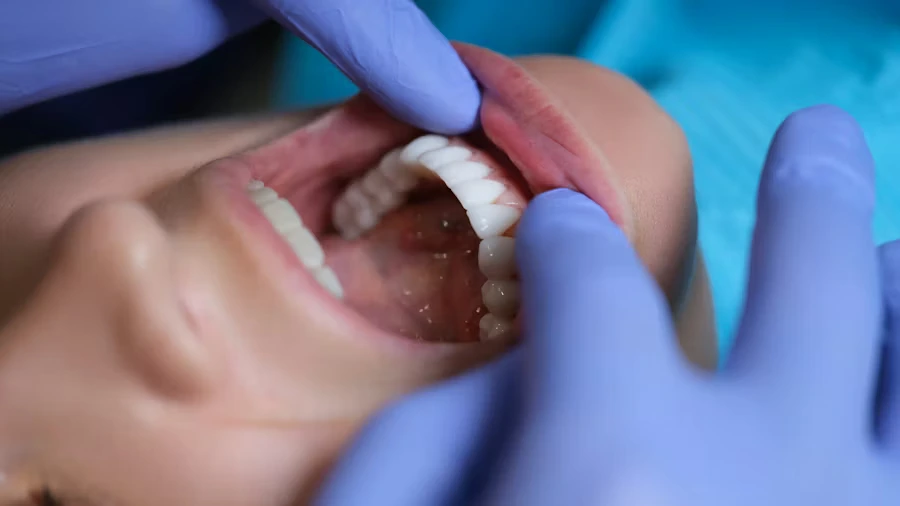
The typical progression goes like this. Bacterial plaque forms on the teeth every day. If not removed effectively, it mineralises into tartar within 10 to 20 days. Tartar irritates the gum and gingivitis develops: red, swollen, bleeding gums. Up to this point, the process is still reversible with proper home hygiene and a professional cleaning session.
If gingivitis is left untreated, bacteria colonise the space between gum and tooth, what dentists call the periodontal pocket. From there, they attack the ligament anchoring the tooth and then the underlying bone. Periodontitis begins. This progression can take months or years, depending on individual predisposition and the risk factors involved.
Symptoms to look out for
Several signs are visible or noticeable before you even sit in the dental chair:
- Gums that bleed during brushing, flossing, or even spontaneously
- Receding gums: teeth look longer, the boundary between crown and root becomes visible
- Persistent bad breath that does not improve with toothpaste or mouthwash: the odour comes from bacteria in the periodontal pockets
- Sensitivity to cold and heat along the gum margin
- Mobility in one or more teeth, or the feeling that they have shifted position
- Gaps opening between teeth where there were none before
- Pain when chewing in more advanced cases
- Pus along the gum margin
Not all symptoms are always present. In many patients the first sign is a chance discovery during a routine check-up: the dentist probes the pockets and finds depths above 4 to 5 mm that should not be there.
Causes and risk factors
The primary cause is always bacterial: the specific bacteria in subgingival plaque. But certain factors accelerate progression significantly:
- Smoking: smokers have a 2 to 7 times higher risk of developing severe periodontitis. Smoking reduces blood supply to the gums, masks bleeding and impairs the local immune response
- Diabetes: the relationship is bidirectional. Diabetes worsens periodontitis; uncontrolled periodontitis worsens diabetes by making blood sugar harder to manage
- Genetic predisposition: some people produce a stronger inflammatory response to oral bacteria, regardless of their hygiene quality
- Chronic stress: lowers immune defences and can encourage habits that compromise oral hygiene
- Medications causing dry mouth: saliva has protective functions; its reduction encourages bacterial colonisation
- Pregnancy: hormonal changes intensify the inflammatory response in the gums
How periodontitis is treated
There is no pill for periodontitis. The standard treatment is called scaling and root planing (SRP), also known as deep cleaning or root debridement. It is a non-surgical procedure in which specialised instruments remove tartar and bacterial biofilm from the periodontal pockets, down to the root surface, smoothing it to make bacterial recolonisation more difficult.
Treatment is carried out under local anaesthesia, by sector (usually 2 to 4 appointments), and is effective in the vast majority of moderate periodontitis cases. After treatment, the pockets reduce in depth, the tissue stabilises and progression stops.
In advanced cases, when pockets are too deep to be treated with non-surgical instrumentation alone, periodontal surgery may be required. The goal is not cosmetic: it is to access the roots for more thorough cleaning and, in some cases, to regenerate lost bone using guided bone regeneration techniques.
The typical treatment pathway at our studio follows these steps:
- 1Periodontal screening: pocket depth measured with a millimetre probe to map the clinical situation
- 2Professional hygiene and home care instruction: the patient learns the correct brushing technique and use of interdental brushes before treatment begins
- 3Scaling and root planing under local anaesthesia: treatment by sector across subsequent appointments
- 4Periodontal re-evaluation after 6 to 8 weeks: pocket depths are re-measured to assess the response to treatment
- 5Periodontal surgery if necessary: for sites that do not respond to non-surgical treatment
- 6Periodontal maintenance: professional hygiene every 3 to 4 months indefinitely
Periodontal maintenance: why it never ends
This is the point that often surprises patients. Periodontitis is a chronic disease: it is managed, not cured the way a common bacterial infection is. After active treatment, bacteria begin to recolonise the pockets within 3 to 4 months if a regular professional hygiene plan is not maintained.
This is why periodontal maintenance every 3 to 4 months (not every 6 as for healthy patients) is an integral part of care, not an optional add-on. Patients who follow it consistently keep their teeth for life. Those who abandon it after a few years, in most cases, hear news they would have preferred not to receive.
Noticed mobility in your teeth or receding gums?
Book a periodontal screening. The assessment is included in the first appointment and takes only a few minutes.
Periodontitis and general health: a connection that matters
Over the past two decades, research has established a solid link between periodontitis and systemic health. The bacteria and inflammatory mediators released from periodontal pockets enter the bloodstream and contribute to inflammatory processes elsewhere in the body. The main documented associations are:
- Increased cardiovascular risk (heart attack, stroke)
- Worsening of type 2 diabetes management
- Higher risk of preterm birth and low birth weight
- Worsening of respiratory conditions in elderly patients
These are not marginal correlations. Clinical studies have shown that treating periodontitis measurably improves blood sugar control in diabetic patients. The mouth is not separate from the rest of the body, and oral infections do not stay oral.
Article by Dr. Luigi di Bari, Dental Studio in Manfredonia (FG). Last updated: June 2026.