Titanium and bone: a permanent bond
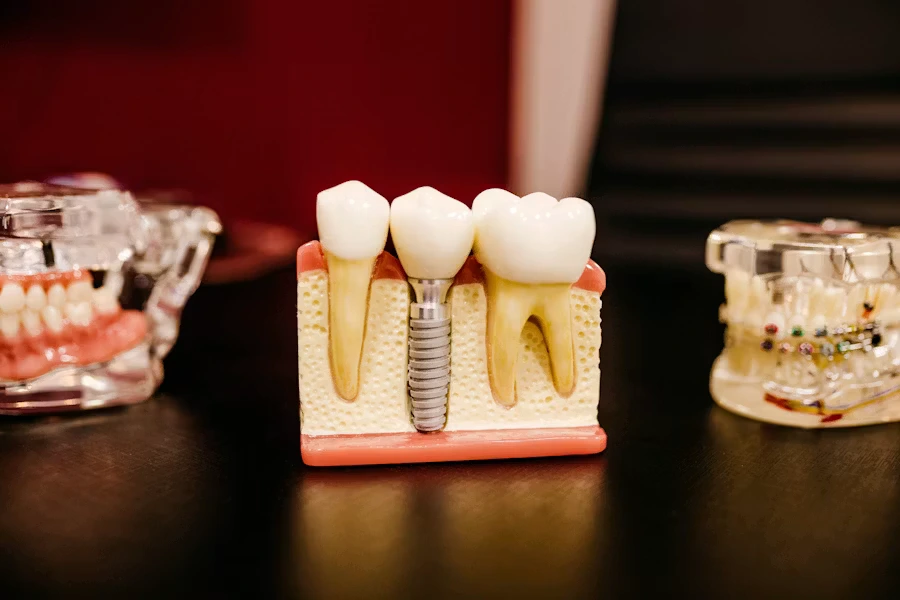
A dental implant is a biocompatible titanium screw surgically inserted into the upper or lower jawbone. In the months following the procedure, osseointegration takes place: bone grows around the implant and "embraces" it, making it an integral part of the bone structure — exactly what happens with a natural tooth root.
This biological fusion is the reason why a correctly placed and maintained implant can last for decades — in many cases a lifetime. The implant itself does not wear out, does not decay, does not deteriorate. It is the most robust and long-lasting component of the entire rehabilitation.
What actually wears out: the crown, not the implant
It is important to distinguish between the implant (the titanium screw in the bone) and the prosthetic crown (the artificial tooth that is visible). These are two separate components.
The titanium implant, if osseointegration has occurred correctly and the patient maintains good hygiene, can remain in place indefinitely. The ceramic or composite crown, on the other hand, is subject to normal mechanical wear: on average it needs replacing after 10–15 years, sometimes later if the patient does not clench heavily or have habits that place excessive strain on it.
So when asking "how long does an implant last", the distinction matters: the root-implant can last a lifetime; the crown above it will likely require replacement over the years, but at a significantly lower cost and with a far simpler procedure than the original implant.
Factors that reduce implant lifespan
Not all implants have the same fate. There are several factors — some modifiable — that can significantly reduce lifespan and lead to implant failure, especially in the first years.
Smoking
This is the most well-documented risk factor in the literature. Smoking reduces bone vascularisation and slows healing, increasing the risk of peri-implant infection (the periodontitis of implants). In smokers, the implant failure rate is significantly higher than in non-smokers. We always recommend stopping smoking at least 2 weeks before surgery and if possible throughout the entire osseointegration period.
Uncontrolled diabetes
Diabetic patients with uncontrolled blood sugar have a reduced immune response and slower healing. This does not mean they cannot have implants — but it is essential that diabetes is well managed before proceeding, and that there is more frequent monitoring in the post-operative period.
Insufficient oral hygiene
Peri-implantitis — inflammation of the tissues around the implant — is the primary cause of long-term implant failure. It develops when bacterial plaque accumulates around the implant without being removed. Prevention is straightforward: toothbrush, dental floss or interdental brush every day, and regular professional cleaning.
Untreated bruxism
Bruxism (nocturnal teeth grinding) generates excessive forces on the crowns and, over time, can compromise the connection between implant and crown, or cause microfractures. If you know you grind your teeth, we recommend a protective night guard — a simple measure that protects both implants and natural teeth.
Want to know if you are a good candidate for an implant?
We assess your clinical situation together with comprehensive diagnostics.
How to maximise the lifespan of your implant
The good news is that almost all risk factors are manageable. Here are the practices that, according to the scientific literature and our clinical experience, truly make a difference:
- Rigorous daily hygiene: soft toothbrush, interdental brush at least once a day in the implant area. Dental floss works, but the interdental brush is even more effective around implant structures.
- Professional cleaning every 6 months: our hygienist removes tartar in areas you cannot reach at home and monitors the peri-implant tissues.
- Annual check-ups with X-ray: allow early detection of any sign of peri-implantitis or bone resorption, when intervention is still straightforward.
- Do not smoke (or minimise it), especially during the osseointegration months.
- Night guard if you suffer from bruxism.
How long does osseointegration take?
After implant insertion, complete osseointegration takes an average of 3–6 months, depending on the quality and quantity of available bone. In posterior zones (upper jaw), where bone is less dense, the timeframe tends to be longer. In the frontal areas of the mandible, where bone density is higher, integration can be faster.
During this period the implant is in place but bears no significant chewing loads. In some selected cases immediate loading is possible — placing a temporary crown on the same day as surgery — but this decision depends on precise clinical parameters such as primary implant stability and bone quality. It is a clinical choice, not an aesthetic one.
Once osseointegration is complete and the definitive crown is fitted, the implant is fully functional. From that point on, with proper maintenance, the lifespan can genuinely extend for decades.
Implants and cost: an investment that pays off over time
One aspect patients consider is the cost-to-lifespan ratio. Compared with alternatives such as a bridge on natural teeth, an implant has a higher initial cost but does not require touching adjacent healthy teeth, and in the long term it is often the most cost-effective option. On the factors that influence cost, we have written a dedicated article: how much does a dental implant cost and what affects the price.
Some patients also look for alternatives to traditional implants — due to bone deficiency, systemic conditions or personal preferences. If you are wondering whether options other than titanium screws exist, you can read our article on dental implants without screws and alternatives to traditional implants.
Our studio's guarantee
At Dr. Luigi di Bari Dental Studio we use the latest-generation implants with treated surfaces to promote rapid and solid osseointegration. Every procedure is planned digitally and, in more complex cases, computer-guided to ensure maximum placement precision.
We offer a written guarantee on the implant, because we believe in the quality of our work and want each patient to feel protected in the long term. Longevity is not a hypothesis: it is a commitment.
Article written by Dr. Luigi di Bari, dentist specialised in advanced implantology with over 22 years of experience and 500+ documented implant cases in Manfredonia (FG). Last updated: May 2026.