The main prosthetic options
In dentistry there are several types of prosthesis, distinguished primarily by how they are anchored: fixed (non-removable) or removable (the patient can take it out). Within these two broad categories there are important variants worth knowing about.
Fixed prosthetics: bridge and implant-supported
The traditional dental bridge
The fixed bridge is one of the most established solutions for replacing one or more consecutive missing teeth. It works by resting on the natural teeth adjacent to the gap, which are prepared (reduced) to serve as pillars. Artificial teeth (pontics) in ceramic are then anchored to the structure.
The main advantage is lower cost compared to implants and no surgical intervention. The limitation is that it requires reducing healthy adjacent teeth, and it does not prevent bone resorption in the area of the missing tooth — without root stimulation, bone thins over time.
Implant-supported prosthetics: the gold standard
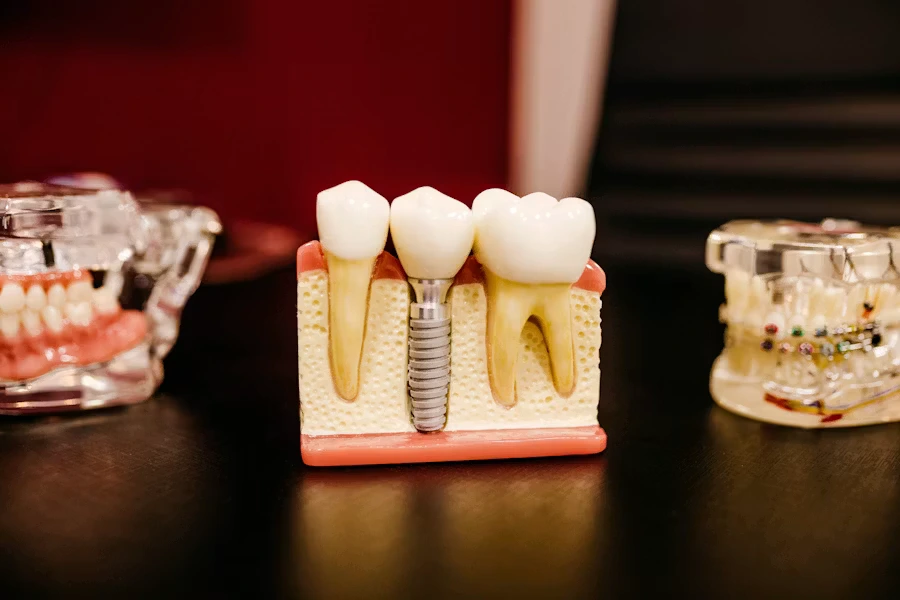
An implant-supported prosthesis is today considered the gold standard for tooth replacement. A titanium implant is placed in the bone to replace the missing root, and a ceramic crown is screwed or cemented onto it. The result is indistinguishable from a natural tooth — in appearance, function, and feel.
Advantages over a bridge: no reduction of neighbouring teeth, bone stimulation that prevents resorption, potentially unlimited implant lifespan, simpler hygiene (cleaned like a natural tooth). For complete arch rehabilitations, the All-on-4 technique allows an entire arch of teeth to be fixed on just four implants, often with immediate loading — fixed teeth the very day of surgery.
Removable prosthetics: partial and full
Partial removable denture
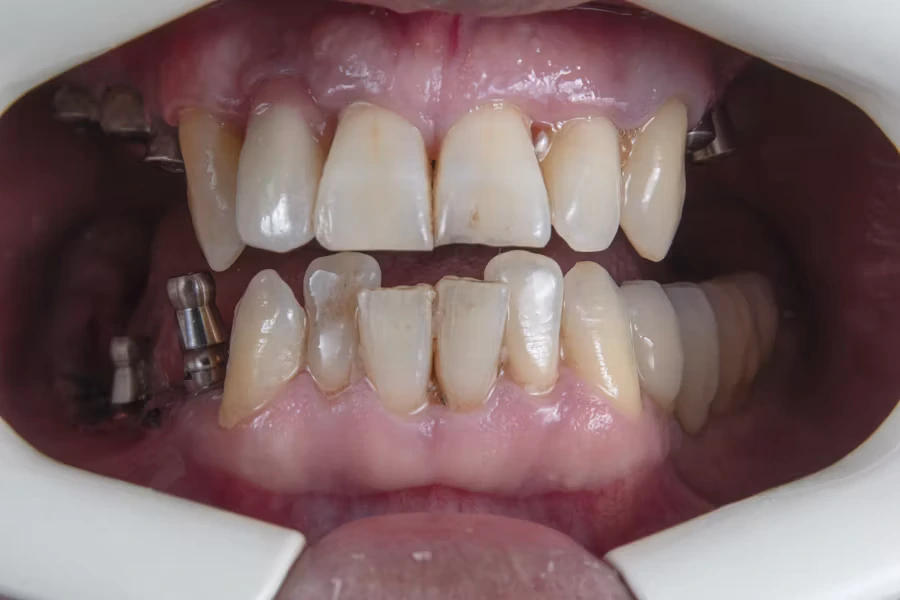
When several non-consecutive teeth are missing and there are no conditions (bone or financial) for implants, a removable partial denture is a valid option. It is an acrylic or metal framework with clasps that hook onto the remaining natural teeth. It is removed at night and for oral hygiene.
Advantages: low cost, no surgery, reversibility. Limitations: less stability compared to fixed solutions, may cause discomfort when chewing hard foods, and requires careful daily cleaning of the denture itself.
Full removable denture
When no natural teeth remain in an arch, a full denture (the classic "false teeth") is the traditional solution. It is held in place by adhesion to the gum, with optional adhesives. It is the most economical solution but also the one with the greatest functional compromises: stability is limited, especially in the lower arch, and over time bone resorbs progressively, altering how the denture fits.
A far superior alternative is the implant-stabilised full denture (overdenture): the removable denture is clipped onto 2–4 implants that lock it firmly in place. The result is much more stable and comfortable, at an intermediate cost between a classic denture and a fixed implant prosthesis.
Want to know which prosthetic solution is right for your situation?
We assess the options together with a full diagnostic visit.
Comparison: how long do different solutions last?
- Titanium implant: potentially unlimited with correct hygiene. The crown above needs replacing on average after 10–15 years.
- Traditional fixed bridge: 10–15 years on average, then may require replacement or re-preparation of the pillars.
- Removable partial denture: 5–8 years, with possible adjustments as the remaining dentition changes.
- Full removable denture: 5–7 years before relining or replacement due to bone resorption.
- Implant-supported overdenture: the implants last long-term; the removable component should be checked every 1–2 years.
How to choose the right solution
The choice depends on a combination of clinical and personal factors: how many teeth are missing and where, available bone volume, condition of remaining teeth, any systemic conditions, and of course budget and patient priorities.
At Dr. Luigi di Bari Dental Studio every prosthetic journey begins with complete diagnostics — clinical examination, panoramic X-ray, possible 3D CBCT for implant planning — and concludes with a detailed, transparent estimate presenting all available options. No two treatment plans are the same.
Prosthetics and implants: how much does cost affect the choice?
Cost is often the first factor patients mention when evaluating prosthetic rehabilitation. It is a legitimate concern, but needs to be contextualised: a removable denture has a lower initial cost but requires periodic maintenance, relining and replacement every 5–8 years. An implant-supported prosthesis requires a larger initial investment but, if maintained, lasts far longer and does not require replacement of the implants themselves.
The factors influencing cost are numerous: the number of elements to replace, the need for bone grafts, the type of material (zirconia, resin, metal-ceramic), and the technology used for planning. If you want to explore this for implant solutions, we have written a dedicated article on the factors that influence the cost of a dental implant.
For patients who for any reason cannot or do not wish to opt for traditional implants, there are also alternatives to standard implants worth knowing before making a decision.
Article written by Dr. Luigi di Bari, Dental Studio in Manfredonia (FG). Last updated: May 2026.