What is a dental bridge?
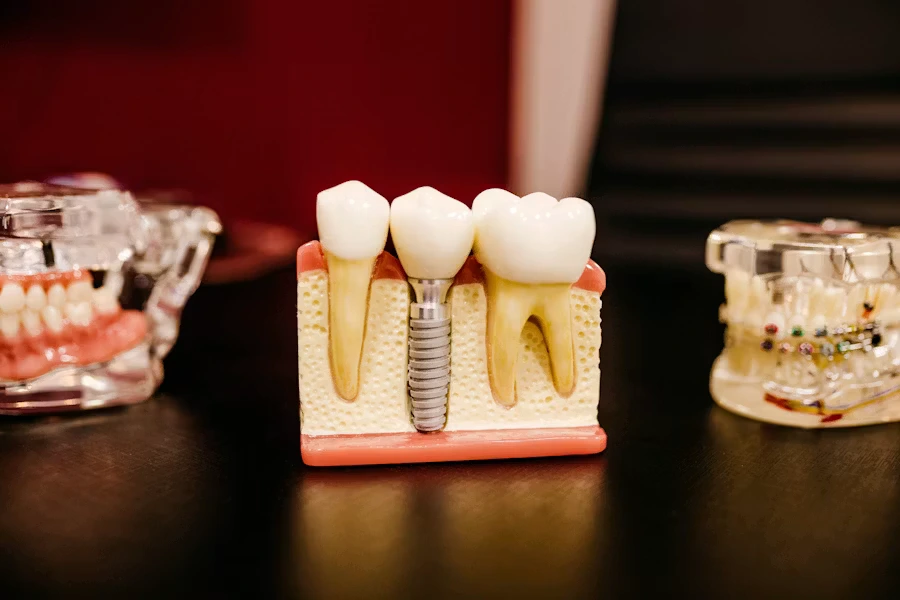
A dental bridge (or fixed bridge) is a prosthesis that fills the gap left by one or more missing teeth by anchoring onto the natural teeth on either side. These teeth, called abutments, are prepared (shaped down) to receive crowns that act as anchors. Between the crowns sits the pontic: the artificial tooth that occupies the empty space, usually not touching the gum or just barely resting against it.
The result is a solid, fixed structure that the patient cannot remove. For many patients it is the first alternative that comes to mind when a tooth is lost, and it is a valid solution in many clinical situations.
How it is made: the stages of treatment
The process for getting a bridge is faster than that for an implant, because it does not require surgery or bone healing time.
- First appointment: the dentist prepares the abutment teeth by reducing their enamel to accommodate the crowns. A digital or traditional impression is taken and sent to the dental laboratory, and a temporary bridge is fitted to protect the prepared teeth and maintain aesthetics in the meantime
- Laboratory: over 7 to 14 days the dental technician fabricates the final bridge in the chosen material, calibrating shape, colour and bite
- Second appointment: the bridge is tried in the mouth, aesthetics and bite are checked, and it is permanently cemented. An occasional additional appointment for minor adjustments may be needed
The entire process typically takes 2 to 3 weeks. During this time the patient wears the temporary bridge with no significant restrictions on daily activities.
Materials: which to choose
The choice of material affects the aesthetics, durability and longevity of the bridge. The three main options are:
Porcelain-fused-to-metal (PFM)
The inner framework is metal (often a cobalt-chromium or gold-platinum alloy) with a porcelain outer layer for colour. It is the most established and durable option, but has one aesthetic limitation: over time a thin greyish line can appear at the gum margin where the metal shows through. Best suited to posterior sectors that are less visible.
All-ceramic (lithium disilicate)
No metal at all: the structure is entirely made of high-strength ceramic. The aesthetic result is excellent, with a translucency very similar to natural enamel. Ideal for anterior teeth and for patients seeking the best possible aesthetic outcome. Requires sufficient abutment reduction to accommodate the ceramic thickness.
Zirconia
Zirconia is the strongest of the dental ceramics and is now used both for the internal framework and for the aesthetic layer (monolithic or layered zirconia). It combines very high mechanical strength with good aesthetics. The preferred choice for posterior sectors subjected to heavy chewing loads and for patients with bruxism.
How long does a dental bridge last?
A well-made bridge that is maintained with good hygiene lasts an average of 10 to 15 years, often considerably longer. The factors that affect longevity are:
- The quality and health of the abutment teeth at the time the bridge is made
- The material used: high-quality zirconia and lithium disilicate tend to outlast traditional PFM
- The patient's home hygiene routine, particularly regular cleaning under the pontic
- Untreated bruxism, which accelerates ceramic wear
- Regular dental check-ups, which allow early identification of problems in the abutments
The main reason a bridge is replaced sooner than expected is decay or deterioration of the abutment tooth beneath the crown. This is why hygiene around the bridge is just as important as hygiene for the rest of your teeth.
How to clean a dental bridge
A regular toothbrush cannot reach the space under the pontic, where plaque and bacteria accumulate. Proper bridge cleaning requires additional tools:
- Floss threader and dental floss (or superfloss): the threader is a small flexible needle that guides the floss into the space under the bridge. Use it every day, working from the front of the mouth towards the back
- Water flosser: the pulsating water jet is very effective at removing debris under the pontic and around crown margins. It does not replace floss but complements it well, especially for patients who find the threader awkward
- Interdental brushes in the correct size: useful for cleaning the side margins of the crowns
Your dentist or hygienist will demonstrate the correct technique when the final bridge is fitted. Professional hygiene every 6 months is essential for removing tartar in hard-to-reach areas and monitoring the condition of the abutments.
Missing a tooth and want to understand your options?
We will assess together whether a bridge is the right choice for your situation.
Bridge or implant: when to choose which
This is the question almost every patient with a missing tooth asks. There is no universal answer: the choice depends on the individual clinical situation. Here are the main guiding criteria.
A bridge is preferable when:
- The teeth adjacent to the gap already have decay, large restorations or root canal treatment: in these cases they would need attention anyway, and the bridge makes use of them as abutments without adding procedures
- Available bone volume is insufficient for an implant and the patient does not want or cannot have bone grafting
- The patient prefers to avoid any surgical procedure
- A quick solution is needed: a bridge is completed in 2 to 3 weeks, whereas an implant requires several months
An implant is preferable when:
- The teeth adjacent to the gap are healthy and intact: grinding them down for a bridge would damage sound tooth structure unnecessarily
- Preserving bone long-term is a priority: an implant stimulates bone like a natural tooth root, preventing the resorption that follows tooth loss
- The solution closest to a natural tooth in function, aesthetics and maintenance is desired
- The patient is young with a long life expectancy: a well-placed implant can last a lifetime
For a detailed comparison of the options available for replacing a missing tooth, read our article on fixed or removable dentures: differences and indications. To explore implant longevity as an alternative, see how long do dental implants last.
Article by Dr. Luigi di Bari, Dental Studio in Manfredonia (FG). Last updated: June 2026.